
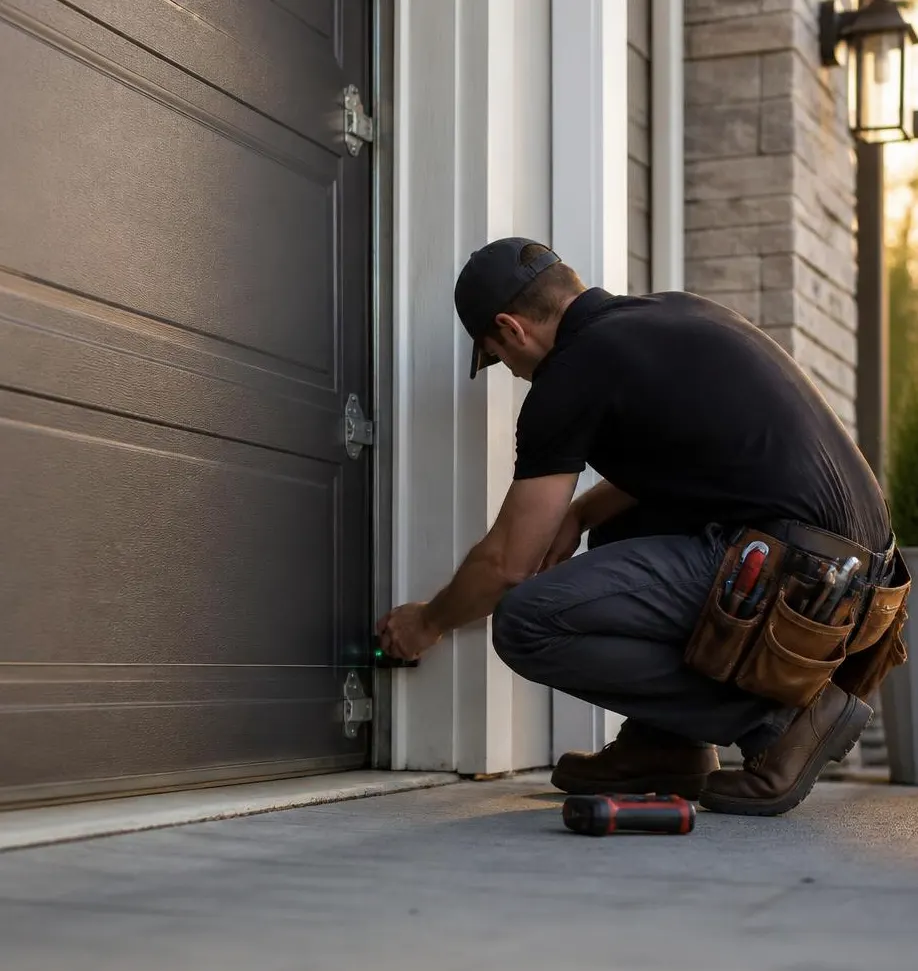
Start With This Rule of Thumb
If your garage door opener sounds like it's grinding gravel or banging metal on metal, the fix is almost always mechanical, not electrical — loose hardware, dry metal, or worn rollers. The exceptions are a humming or popping torsion spring, a grinding sound that only happens near the top or bottom of travel, and gear noise coming from inside the opener's motor housing. Those three point to parts under real tension or load, and they're where DIY should stop.
Tools You'll Need
- Step ladder
- Work gloves and safety glasses
- Socket set and adjustable wrench
- White lithium grease made for garage doors (not WD-40)
- Replacement nylon rollers (if swapping steel ones)
- Rubber isolation kit for the opener motor mount
- Flashlight
Step-by-Step: Cheap Fixes First
1. Listen Before You Touch Anything
Run the door up and down once and pay attention to where the noise happens and what it sounds like. A rattle through the whole cycle usually means loose hardware. A sharp screech at the rollers means dry metal. A bang at the very top or bottom can mean a spring or a hard-stop issue. This five-minute diagnosis saves you from fixing the wrong thing.
2. Tighten Every Bolt You Can Reach
Sussex winters put homes through big temperature swings, and metal brackets, lag screws, and track hardware work loose faster than people expect. Go along the track brackets, the header bracket, and the opener's mounting bracket with a socket wrench and snug everything down. Don't overtighten into wood framing — snug is enough.
3. Lubricate the Moving Metal Parts
Use a garage-door-specific white lithium grease on hinges, roller stems, and the spring coils (a light coat, not a soak). Skip WD-40 for this job — it's a solvent, not a long-lasting lubricant, and it attracts grit that makes noise worse by spring thaw. If you have a chain-drive opener, add a drop of chain lube to the chain itself.
4. Swap Steel Rollers for Nylon
Steel rollers are the single biggest noise source on a lot of older doors. Nylon rollers with sealed bearings run much quieter and are inexpensive. Replace them one at a time, loosening the roller bracket just enough to slide the old roller out and the new one in, so the door stays supported the whole time.
5. Isolate the Opener From the Ceiling
A chain-drive opener bolted straight to ceiling joists can transmit every clunk into the room above the garage, which matters if you've got a bedroom or living space up there. A rubber vibration-isolation kit between the opener's mounting bracket and the ceiling bracket, plus rubber washers at the rail-to-header connection, cuts a surprising amount of structural noise for not much money.
6. Check Chain or Belt Tension
Seasonal temperature changes can loosen a chain-drive opener's tension, causing a slapping sound against the rail. Most openers have a simple adjustment nut on the trolley assembly — check your manual and adjust until the chain just clears the bottom of the rail without sagging.
Where DIY Should Stop
Hand this off to a technician if you hear or see any of the following:
- Humming, popping, or a visible gap in a coiled spring — torsion springs are under enough tension to cause serious injury, and spring work should never be DIY.
- Grinding from inside the motor housing — this usually means a worn or stripped drive gear, which needs the unit opened up and parts replaced correctly.
- A bent or misaligned track — common after a hard winter bump from a vehicle or a snow blower catching the bottom bracket. Forcing a bent track back into place by hand can crack the rail or throw the door off its rollers.
- Noise that gets worse after you've already tightened, lubricated, and swapped rollers — at that point the opener itself is likely reaching the end of its life.
The Belt-Drive Swap
If your chain-drive opener is older and every quiet fix has already been tried, replacing it with a belt-drive opener is usually the real solution. A rubber belt runs far quieter than a metal chain because there's no metal-on-metal contact driving the trolley. It's a worthwhile upgrade for garages near bedrooms or home offices, and it also holds up well through Waukesha County winters since there's no chain to stretch or need re-tensioning after cold snaps.
When to Call Sussex Garage Door Specialists
If you've worked through the cheap fixes and the door is still loud, or you've found a spring issue or motor noise you don't want to touch, that's our job. We offer Garage Door Opener Service to diagnose gear, bearing, and sensor issues, and Spring Replacement for springs that are worn, rusted from road salt exposure, or showing gaps in the coil. We'll also tell you honestly whether a repair makes sense or a belt-drive replacement will save you money in the long run.
If your garage door opener in Sussex, WI is grinding, banging, or just driving you nuts every time it runs, give Sussex Garage Door Specialists a call and we'll get it quiet again before the deep cold sets in.